

What is Pump Controller
A pump controller is an advanced device designed to optimise the operation of a water pump by intelligently regulating its speed, pressure, and flow. The primary purpose of a pump controller is to enhance pump performance, ensuring that the system runs smoothly and efficiently while simultaneously minimising energy consumption and reducing wear and tear on the pump components.
Benefits of Pump Controller
Energy efficiency
Pump controllers optimize pump performance by adjusting the pump's speed according to demand. This reduces energy consumption and lowers electricity costs, especially in commercial and agricultural settings where pumps run for long periods of time.
Extend pump life
By maintaining consistent pressure and flow, pump controllers reduce wear on pump components. This extends the life of the pump and reduces the need for costly repairs and replacements.
Improve system performance
The pump controller provides a more stable water supply, minimizing pressure fluctuations and ensuring uniform water flow. This improves overall system performance and increases user satisfaction.
Enhanced system protection
Pump controllers monitor pump performance and can detect potential problems, such as low water levels or motor overloads. By responding promptly to these issues, the controller protects the pump from damage and minimizes the risk of system failure.
-
![Three Phase 0.75-4kw Dual Pump Control Panel]()
Three Phase 0.75-4kw Dual Pump Control Panel
Add to Inquiry -
![3-Phase 4kw Submersible Pump Control Panel]()
3-Phase 4kw Submersible Pump Control Panel
Add to Inquiry -
![Single-phase 0.37-2.2kw Intelligent Single Pump Controller]()
Single-phase 0.37-2.2kw Intelligent Single Pump Controller
Add to Inquiry -
![Three Phase 0.75-4kw Single Pump Control Panel]()
Three Phase 0.75-4kw Single Pump Control Panel
Add to Inquiry -
![0.37-2.2kw Submersible Pump Start Controller]()
0.37-2.2kw Submersible Pump Start Controller
Add to Inquiry -
![Single Pump Control And Protect Box]()
Single Pump Control And Protect Box
Add to Inquiry -
![Single Pump Control And Protection Module.]()
Single Pump Control And Protection Module.
Add to Inquiry -
![Duplex Intelligent Pump Control Box]()
Duplex Intelligent Pump Control Box
Add to Inquiry -
![Single Phase Digital Pump Controller]()
Single Phase Digital Pump Controller
Add to Inquiry -
![Single Phase Water Pump Control Box]()
Single Phase Water Pump Control Box
Add to Inquiry -
![2 Pump Intelligent Pump Control Panel]()
2 Pump Intelligent Pump Control Panel
Add to Inquiry -
![2 Pump Intelligent Pump Controller]()
2 Pump Intelligent Pump Controller
Add to Inquiry




Why Choose Us
Advanced equipment
We take strong measures to ensure that we use the highest quality equipment in the industry and that our equipment is regularly and meticulously maintained.
Competitive prices
We offer our products at competitive prices, making them affordable for our customers. We believe that high-quality products should not come at a premium, and we strive to make our products accessible to all.
Efficient and convenient
The company has established marketing networks around the world to provide high-quality services to customers in an efficient and convenient manner.
Quality assurance
In terms of quality assurance, the company strictly follows the standards and norms of the industry quality system. Adopt industry-leading testing equipment to ensure product quality and good reputation.
High quality products
We always put customer needs and expectations in the first place, refine on, continuous improvement, to seek every opportunity to do better, to provide customers with their expectations of quality products, to provide customers with the most satisfactory service at anytime.
Professional team
We have a team of skilled and experienced professionals who are well-versed in the latest technology and industry standards. Our team is dedicated to ensuring that our customers get the best service and support possible.
Pump Controller Applications
Residential applications
In residential settings, pump controllers are often used in conjunction with rainwater collection systems and garden irrigation systems. They ensure a stable water supply while reducing energy consumption and extending the life of the pump.
Agricultural applications
Australian farmers rely heavily on efficient water management systems to optimize crop yields and conserve water. Pump controllers play a vital role in agricultural irrigation systems, ensuring consistent and efficient water supply to crops. Pump controllers contribute to the overall sustainability of agricultural operations by reducing energy consumption and extending pump life.
Commercial applications
In commercial environments such as office buildings, hotels and shopping malls, pump controllers are used to manage water systems, including heating, ventilation and air conditioning (HVAC) systems. Using a pump controller in these applications ensures consistent water pressure and flow, improving efficiency and user satisfaction.
Industrial applications
Pump controllers are widely used in a variety of industrial processes, including manufacturing, mining, and wastewater treatment. They provide precise control of water flow and pressure, ensuring optimal performance and efficiency in these demanding applications.

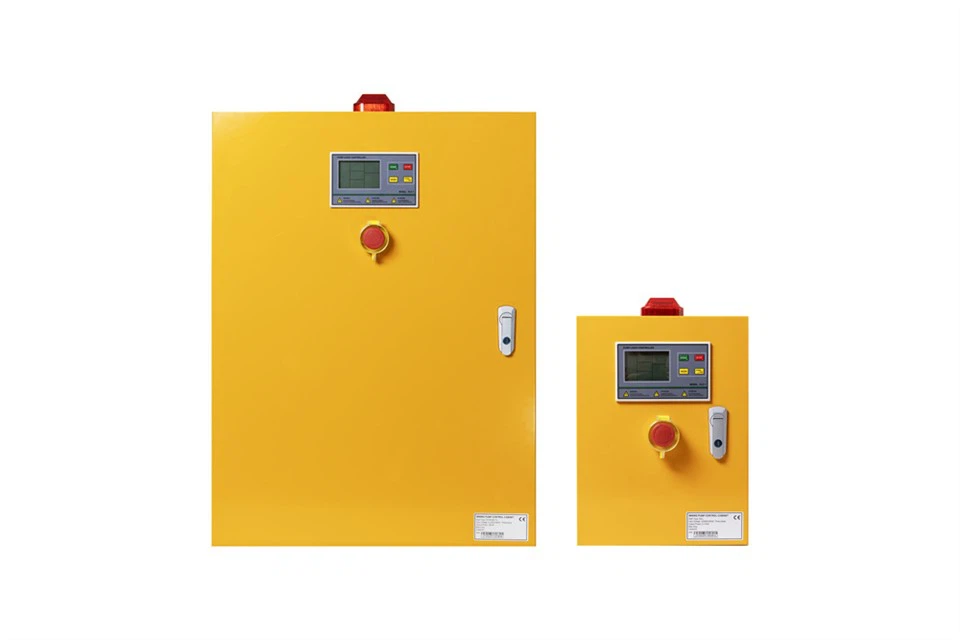
As previously stated, the controller' s primary function is to protect the pump. Pumps are an expensive investment, so avoiding damage and extending their life will pay off. When a heavy rainstorm hits, these pump systems can fill up very quickly and flood if not pumped out. The floats or pressure sensors will relay the water levels to the controller. The pump controller in turn, will tell whether one or two pumps to turn on, depending on the inflow of water. The controller also has an inbuilt feature to alternate the pumps between uses. In this way, not one single pump is overused, but instead, the load is shared between each other. In the long run, this protects the pumps and minimises their likelihood of breaking down. Debris flowing into the pit such as rocks and leaves can cause the pump to jam and get blocked. Without a controller, pumps would normally keep trying to empty the pit to no avail, until either it overheats, or the motor coils of the pump are irreparably damaged. Fortunately, with the use of controller, the system trips out, isolating the area from the rest of the house, and prevents the pumps from burning themselves out. Plus, it sounds an alarm so that a technician can be called in to assess the situation.
Types of Pump Controllers
Constant pressure pump controller
Constant pressure pump controllers maintain constant water pressure by automatically adjusting the speed of the pump as demand changes. This ensures a steady flow of water, minimizing pressure fluctuations and reducing stress on the pump.
Variable speed pump controller
Variable speed pump controllers allow for a more dynamic approach to pump management. These controllers vary the speed of the pump based on demand, ensuring the pump operates at optimal efficiency. This reduces energy consumption and extends the life of the pump.
Pump Controller Components
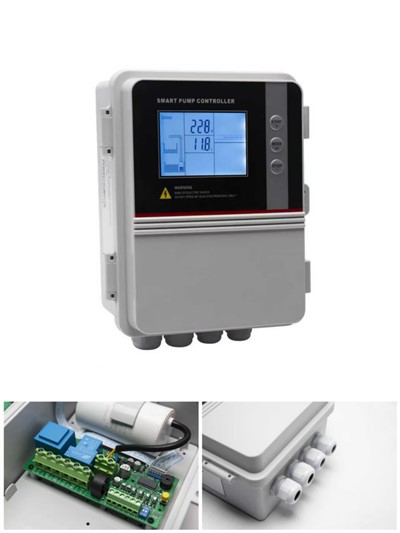
A pressure sensor
This sensor monitors water pressure and sends a signal to the controller to adjust the pump' s speed accordingly.
A flow sensor
This sensor measures water flow and adjusts the pump' s speed to maintain the desired flow rate.
A motor control unit
This unit adjusts the pump motor' s speed based on input from the pressure and flow sensors.
A user interface
This interface allows users to set their desired pressure, flow rate, and other operational settings.
Choose the Right Pump Controller
The pump controller should be compatible with the pump's motor voltage, whether single phase or three phase. Use of an incompatible controller may result in reduced performance or damage to the pump and controller.The pump controller should be designed to meet the power requirements of the pump motor. A mismatch in horsepower capabilities can result in lack of performance or even a burned motor. Pump controllers are designed for different types of pumps, such as submersible or surface pumps. Make sure the controller you choose is suitable for your specific pump type to ensure optimal performance and longevity.Choose a pump controller that uses the control method that best suits your needs, whether constant pressure or variable speed control.A pump controller's user interface significantly affects ease of use and customization. When choosing a controller, look for an intuitive interface that allows for quick setup and easy adjustment of settings to ensure smooth operation and optimal performance. Controllers with built-in diagnostic tools can monitor pump performance and identify potential problems or inefficiencies. This proactive approach helps prevent unexpected problems and allows for timely maintenance and repairs. The remote monitoring feature enables users to access real-time pump performance data and make necessary adjustments from a distance. This feature saves time and resources, especially in large-scale or hard-to-reach installations. Controllers equipped with alarm notifications can alert users to potential problems such as low water levels, motor overloads, or system leaks. Prompt notification allows for prompt action, minimizing the risk of damage and system failure.
Basically, an automatic pressure controller is a motor that will automatically switch on when water in the overhead tank (OHT) falls below the lower limit and vice versa. The circuitry behind it is straightforward, minimising the potential for electrical issues, and it is very energy efficient too. It is powered by a 12-volt DC power supply, which consumes around as much power as charging your phone.Without getting too technical, an automatic pressure controller relies on the water pressure to operate. Using automatic pressure control will eliminate the need for all the other components in a traditional water pressure control system, making the plumbing in your home less complicated (and less expensive too). With less complex controls and more automation – not to mention the absence of a pressure tank, – adjusting the water pressure in your home just got a whole lot easier.
How Do You Connect An Automatic Pump Controller

Installing online automatic pump controllers is very simple - they are designed for coupling to the water pump outlet (with or without an adapter, depending on the pump model). However, when it comes to electrical components, you may need an electrician's help, as with any irrigation controller. If you're keen on a DIY solution, purchasing a pre-wired pump and controller can eliminate the need for wires and simplify the installation process. Otherwise, check if you are purchasing a "plug and play" model or if you will need an electrical contractor to install the unit. Depending on your model, the installation steps you need to take will vary greatly - some are pre-threaded, so you shouldn't use headbands or pipe dope to install, while some do require it for a secure seal. Regardless, installing a pump pressure controller requires connecting the inlet and outlet to the water pump and pipes, with or without adapters depending on compatibility. Electrical components may need to be connected by an electrician, but installation is much simpler if you go with a "plug and play" model. Remember to prime your new automatic pressure controller according to the manual instructions before use.
Why Use a Pump Controller
In running the pump until it hits the pressure switch you are running the pump as hard as it can possibly work. This means that the pressure in the system will be at its absolute maximum. This puts strain on the hoses, on the fittings and on the pump. It therefore increases the chances of split hoses, leaking joints and increases wear on your pump, shortening its life.
As the pressure switch cuts out the pump is at maximum, working as hard as it possibly can and therefore drawing maximum current from the battery. Hence as the switch opens it is under great strain. The high current and the fact that the pump is an inductive load (with stored energy) means that the pressure switch contacts are likely to arc and eventually they will fail.
Without a controller the pump will not stop until it hits the pressure switch. With a controller with dead end detection properly calibrated, the pump will be stopped a long time before this high pressure and high pump load is reached. This means that because the pump is turned off earlier you are saving battery energy, thus increasing both the battery life and the amount of time you can work on a battery charge.
Without any type of flow constrictor the water will be at full flow. Good for putting out fires, but not so good for cleaning windows. The aim should be to work with only sufficient water to get a good clean. This is a benefit because the aim is to conserve the water in order to increase the amount of work possible from a tank. You also save time because you don't have to make as much pure water and you save resin as well. Working with large amounts of water can also cause a hazard for those around you, especially in cold conditions.
The faster and longer the pump is running the hotter it will get. As the heat in the motor increases it will lose efficiency meaning some of the current drawn form the Battery is waster generating heat instead of turning the motor. The knock on effect here is water flow will drop slightly even though you are drawing the maximum current the pump is rated for.
JIT SMART, only focus on designing, developing, manufacturing, selling smart pump control panel & pump motor protector. With more than 20 years of experience in the pump controller industry, we learn pump manufacturer's, user's demand well and provide complete water pump control & protection solutions.
FAQ
Shanghai JIT Smart Technology Co., Ltd. is one of the most professional pump controller manufacturers and suppliers in China, featured by quality products and good service. Please rest assured to buy pump controller at competitive price from our factory.
Water Pressure Booster Pump Controller, 3 Phase Pump Control Panel, Single Phase Submersible Control Panel