

What is Single Pump Control Panel
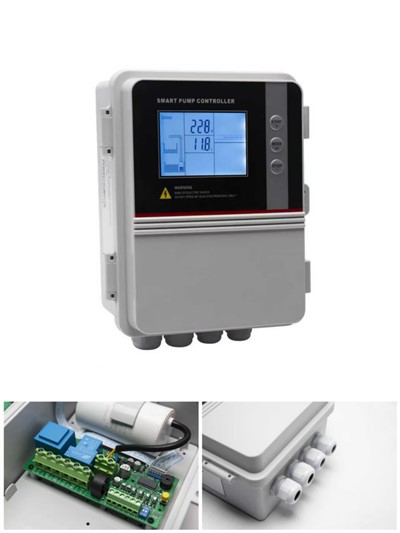
The Simplex and Duplex Pump Control Panel are designed to control and start up the electric motors of centrifugal, sump and borehole pumps in clean and waste water applications. The Simplex works with a single pump, whereas the Duplex pump control box is for a twin pump set.
Benefits of Single Pump Control Panel
Automatic operation
Pump control panels enable automated operation of the pump, eliminating the need for manual intervention. This ensures consistent and efficient operation, even in unmanned or remote locations.
Energy efficiency
By monitoring and adjusting pump operation based on system demands, control panels optimize energy consumption. They prevent unnecessary pump starts and stops, reducing energy wastage and extending equipment lifespan.
System protection
Pump control panels incorporate various protective devices that prevent equipment damage and failure. By continuously monitoring system parameters, they can detect abnormal conditions and activate alarms or shut down the pump to prevent further damage.
Enhanced maintenance and troubleshooting
With sensors and communication interfaces, pump control panels simplify maintenance and troubleshooting processes. They provide real-time data and alerts, enabling operators to quickly identify and address issues, reducing downtime and repair costs.
-
![Single-phase 0.37-2.2kw Intelligent Single Pump Controller]()
Single-phase 0.37-2.2kw Intelligent Single Pump Controller
Add to Inquiry -
![Single Phase Water Pump Control Box]()
Single Phase Water Pump Control Box
Add to Inquiry -
![Intelligent Single Pump Controller]()
Intelligent Single Pump Controller
Add to Inquiry -
![Single Pump Controller Box]() Add to Inquiry
Add to Inquiry -
![Control Panel Single Phase Submersible Pump]()
Control Panel Single Phase Submersible Pump
Add to Inquiry -
![Sewage Single Pump Controller]() Add to Inquiry
Add to Inquiry


Why Choose Us
Advanced equipment
We take strong measures to ensure that we use the highest quality equipment in the industry and that our equipment is regularly and meticulously maintained.
Competitive prices
We offer our products at competitive prices, making them affordable for our customers. We believe that high-quality products should not come at a premium, and we strive to make our products accessible to all.
Efficient and convenient
The company has established marketing networks around the world to provide high-quality services to customers in an efficient and convenient manner.
Quality assurance
In terms of quality assurance, the company strictly follows the standards and norms of the industry quality system. Adopt industry-leading testing equipment to ensure product quality and good reputation.
High quality products
We always put customer needs and expectations in the first place, refine on, continuous improvement, to seek every opportunity to do better, to provide customers with their expectations of quality products, to provide customers with the most satisfactory service at anytime.
Professional team
We have a team of skilled and experienced professionals who are well-versed in the latest technology and industry standards. Our team is dedicated to ensuring that our customers get the best service and support possible.
Motor starter
This component is responsible for starting and stopping the electric motor that drives the pump. It ensures that power is supplied to the motor in a controlled manner, preventing sudden surges or fluctuations that could damage the equipment.
Control switches and indicators
These switches and indicators are used to manually control the operation of the pump. They allow operators to start and stop the pump, as well as monitor its status and any alarms or faults that may occur.
Protection devices
Pump control panels incorporate a range of protection devices to safeguard the pump and its associated equipment. These devices include circuit breakers, fuses, and overload relays, which are designed to detect and interrupt power in the event of an electrical fault or motor overload.
Sensors and transducers
These devices are used to measure critical parameters such as flow rate, pressure, and temperature. They provide feedback to the control panel, allowing it to adjust the operation of the pump based on the system’s requirements.
Communication interfaces
Some pump control panels feature communication interfaces that allow remote monitoring and control of the system. These interfaces enable operators to access the panel’s status and data remotely, facilitating faster troubleshooting and maintenance.
What Can Be Connected To The Pump Controller For Control
Sensor circuit failure
If the water pump protector shows that the sensor in the water pump has its loop failure, then it is necessary to connect the sensor in series with a multimeter, check the loop current of the sensor, and judge the fault loop through the characteristics of wrong polarity and delay. If you are not sure which sensor circuit the leak alarm belongs to, you should also measure the current of the sensor in order to find the sensor without taking the pump out.
Ground fault
If the pump has a ground fault, a stable pump protector can also be displayed. At this time, the technician should check whether there is an abnormality in the grounding of the signal core, and if there is, prevent false leakage instructions caused by this. When checking the ground fault, use the ohm range of the multimeter to do the test instead of using a voltage greater than five hundred volts, and also measure between each sensor lead and the ground.
Leakage failure
If the water pump has a leakage fault, it can also be checked by the response of the water pump protector. When a leak alarm occurs, a resistor less than five hundred ohms can be connected to the sensor output of the pump for detection, but it should be noted that there will be a delay before the leak light turns on during detection.

Pumps hum away in the background, playing an invaluable role in a staggering array of distinct applications. From fueling our vehicles at the petrol station to keeping crucial industries running, facilitating proper irrigation, and ensuring water supply systems function optimally, pumps are indispensable tools for transferring fluids in our modern world.
The implementation and efficient operation of these unsung heroes are not as straightforward as it may seem. It requires keen attention to intricate details and proper management tools to maintain optimal performance. The secret to their smooth operation is largely down to an unsung technological marvel: pump control systems and pump controllers.
Irrespective of the diversity in pump types and applications, controllers and control systems have become essential companions to these mechanical workhorses. They aid in the regulation and systematic control of pump operations, driving the seamless functionality of both single and multiple pump installations.
Why Use a Pump Controller
1. In running the pump until it hits the pressure switch you are running the pump as hard as it can possibly work. This means that the pressure in the system will be at its absolute maximum. This puts strain on the hoses, on the fittings and on the pump. It therefore increases the chances of split hoses, leaking joints and increases wear on your pump, shortening its life.
2. As the pressure switch cuts out the pump is at maximum, working as hard as it possibly can and therefore drawing maximum current from the battery. Hence as the switch opens it is under great strain. The high current and the fact that the pump is an inductive load (with stored energy) means that the pressure switch contacts are likely to arc and eventually they will fail.
3. Without a controller the pump will not stop until it hits the pressure switch. With a controller with dead end detection properly calibrated, the pump will be stopped a long time before this high pressure and high pump load is reached. This means that because the pump is turned off earlier you are saving battery energy, thus increasing both the battery life and the amount of time you can work on a battery charge.
4. Without any type of flow constrictor the water will be at full flow. Good for putting out fires, but not so good for cleaning windows. The aim should be to work with only sufficient water to get a good clean. This is a benefit because the aim is to conserve the water in order to increase the amount of work possible from a tank. You also save time because you don't have to make as much pure water and you save resin as well. Working with large amounts of water can also cause a hazard for those around you, especially in cold conditions.
5. The faster and longer the pump is running the hotter it will get. As the heat in the motor increases it will lose efficiency meaning some of the current drawn form the Battery is waster generating heat instead of turning the motor. The knock on effect here is water flow will drop slightly even though you are drawing the maximum current the pump is rated for.
Single Pump Control Panel Maintenance Practices
Visual Inspection and Cleaning
Periodic visual inspection of control panel components, including the main controller unit, sensors, and control devices, should be conducted to detect signs of wear, corrosion, or damage. Additionally, the panel enclosure should be cleaned to remove dust, debris, and other contaminants that may affect its operation.
Functional Testing and Calibration
Functional testing of the control panel should be performed at regular intervals to verify the proper operation of control and protection devices as well as the accuracy of sensor readings. Calibration of sensors and monitoring devices should also be carried out to maintain their accuracy and reliability.
Firmware and Software Updates
If the control panel incorporates firmware or software components, regular updates and maintenance of these components should be undertaken to address security vulnerabilities, improve performance, and ensure compatibility with other systems or devices.
Documentation and Record-Keeping
Maintaining comprehensive documentation of maintenance activities, test results, and component replacements is crucial for tracking the performance and history of the control panel, as well as for demonstrating compliance with maintenance requirements and industry standards.
Why Pump Control Panels Matter
Keeping Things Working
They make sure pumps keep doing their job without any problems.
Saving Energy
Some control panels help save energy by making pumps work just as hard as they need to.
Staying Safe
Control panels have safety features to make sure nobody gets hurt and nothing gets broken.
Fixing Problems
If something goes wrong, control panels can figure out what’s happening and try to fix it.
Different Types of Pump Control Panels
Basic panel
These panels perform simple operations such as turning the pump on and off. They are suitable for small pumps that do not require much control.
Beautiful panel with speed control
Some panels allow you to change the speed at which the pump operates. This helps save energy and ensures the pump is not overworked.
Smart panel
Smart panels are like super smart control panels. They can do a lot of things like talk to other machines and even solve some problems themselves.
Remote panel
These panels can be controlled from a distance. This means people can keep an eye on the pump even when they're not on site.
Installation of Single Pump Control Panel
Installation Best Practices
During the installation of water pump control panels, several best practices should be followed to ensure that the panels are integrated seamlessly into the water pump system and comply with relevant electrical and safety standards. These best practices include.
Proper Mounting and Enclosure Selection
Control panels should be mounted in a location that provides adequate ventilation, protection from environmental factors, and easy access for operation and maintenance. The selection of an appropriate enclosure based on the environmental conditions and installation requirements is crucial to safeguarding the panel components and ensuring their reliable operation.
Wiring and Termination
The wiring and termination of electrical connections within the control panel should be carried out in accordance with industry standards and best practices to prevent issues such as electrical faults, short circuits, and poor connectivity. Proper labeling, routing, and securing of wiring within the panel enclosure are essential for maintaining the integrity and safety of the electrical installation.
Compliance with Regulations
Installers should ensure that the installation of water pump control panels complies with local electrical codes, regulations, and safety standards to guarantee the safety of personnel, the reliability of the electrical installation, and the legal compliance of the system.
Testing and Commissioning
Thorough testing and commissioning of the control panel should be conducted to verify its proper functionality, adherence to design specifications, and integration with the water pump system. This includes functional testing of control and protection devices, verification of sensor inputs, and validation of communication and connectivity features.
JIT SMART, only focus on designing, developing, manufacturing, selling smart pump control panel & pump motor protector. With more than 20 years of experience in the pump controller industry, we learn pump manufacturer's, user's demand well and provide complete water pump control & protection solutions.
FAQ
Shanghai JIT Smart Technology Co., Ltd. is one of the most professional single pump control panel manufacturers and suppliers in China, featured by quality products and good service. Please rest assured to buy single pump control panel at competitive price from our factory.
3 Phase Pump Controller, Control Panel Single Phase Submersible Pump, Sewage Single Pump Controller