

What is the starting method of a pump controlled by a 3 Phase Pump Controller?
Aug 06, 2025
A 3 Phase Pump Controller plays a crucial role in the efficient and reliable operation of pumps. As a supplier of high - quality 3 Phase Pump Controllers, I am often asked about the starting methods of pumps controlled by these devices. In this blog, I will delve into the various starting methods and explain their significance in different applications.
Direct - On - Line (DOL) Starting
The Direct - On - Line (DOL) starting method is the simplest and most straightforward way to start a pump controlled by a 3 Phase Pump Controller. In this method, the pump motor is directly connected to the three - phase power supply through the controller. When the start command is given, the full voltage of the power supply is applied to the motor windings instantaneously.
The main advantage of DOL starting is its simplicity. It requires minimal control equipment and is relatively inexpensive to implement. Since the motor receives the full supply voltage, it can develop high starting torque, which is beneficial for pumps that need to overcome high static head or start under heavy load conditions. For example, in some industrial water supply systems where the pump has to lift water from a deep well or supply water to a high - rise building, DOL starting can provide the necessary power to get the pump running quickly.
However, DOL starting also has some drawbacks. The high inrush current during starting can cause significant voltage drops in the power supply system. This can affect other electrical equipment connected to the same supply, leading to flickering lights or malfunctions in sensitive electronics. Additionally, the high mechanical stress on the motor and pump components due to the sudden application of full voltage can reduce their lifespan.
Star - Delta Starting
Star - Delta starting is another common method used with 3 Phase Pump Controllers. In this method, the motor windings are initially connected in a star configuration when starting. In the star connection, the voltage across each winding is reduced to 1/√3 (approximately 57.7%) of the line voltage. This results in a lower starting current compared to DOL starting.
After a certain period, usually determined by a timer in the 3 Phase Pump Controller, the motor windings are re - connected in a delta configuration. In the delta connection, the motor operates at the full line voltage, providing the normal running torque. The transition from star to delta connection is seamless, and the controller ensures a smooth changeover.
The main advantage of star - delta starting is the reduced starting current. This helps to minimize the voltage drops in the power supply system and reduces the stress on the electrical network. It is particularly suitable for pumps in commercial buildings or small - scale industrial applications where the power supply capacity is limited. However, star - delta starting also has some limitations. The starting torque is relatively low compared to DOL starting, so it may not be suitable for pumps that need to start under heavy load conditions.
Auto - Transformer Starting
Auto - transformer starting is a more sophisticated method that uses an auto - transformer to reduce the voltage applied to the motor during starting. The auto - transformer has multiple taps, allowing the user to select the appropriate starting voltage. When the pump is started, the motor is connected to the auto - transformer, and a reduced voltage is applied to the motor windings.
As the motor accelerates, the voltage is gradually increased until the motor reaches its full speed. At this point, the motor is disconnected from the auto - transformer and directly connected to the full - voltage power supply. The 3 Phase Pump Controller manages this process, ensuring a smooth and controlled start.
Auto - transformer starting offers several advantages. It provides a high starting torque compared to star - delta starting while still reducing the starting current. This makes it suitable for large - capacity pumps that need to start under heavy load conditions. Additionally, the ability to select different starting voltages allows for more flexibility in matching the starting requirements of the pump to the power supply system. However, auto - transformer starting is more complex and expensive than DOL or star - delta starting, as it requires an auto - transformer and additional control circuitry.
Soft - Starter Starting
Soft - starter starting is a modern and advanced method that uses solid - state devices to control the voltage applied to the motor during starting. A soft - starter gradually increases the voltage applied to the motor over a pre - set time period, allowing the motor to accelerate smoothly. This results in a very low inrush current and minimal mechanical stress on the motor and pump components.
The 3 Phase Pump Controller with a soft - starter function can be programmed to adjust the starting time, acceleration rate, and other parameters according to the specific requirements of the pump. Soft - starters also offer additional features such as overload protection, phase - loss protection, and motor temperature monitoring.
Soft - starter starting is ideal for applications where a smooth start is required, such as in water treatment plants or HVAC systems. The reduced inrush current and mechanical stress can extend the lifespan of the motor and pump, and the additional protection features can improve the reliability of the system. However, soft - starters are more expensive than traditional starting methods, and they require proper sizing and programming to ensure optimal performance.
Variable Frequency Drive (VFD) Starting
Variable Frequency Drive (VFD) starting is the most advanced and versatile method for starting pumps controlled by a 3 Phase Pump Controller. A VFD can vary both the frequency and voltage of the power supply to the motor, allowing for precise control of the motor speed.
When starting a pump with a VFD, the frequency and voltage are initially set at a low value. As the motor accelerates, the frequency and voltage are gradually increased in a controlled manner. This results in a very smooth start, with almost no inrush current. The VFD can also be used to control the pump speed during operation, which can lead to significant energy savings.
For example, in a pumping system where the flow rate needs to be adjusted according to the demand, a VFD can reduce the pump speed when the demand is low, saving energy. The 3 Phase Pump Controller integrated with a VFD can provide advanced control features such as PID control, which can maintain a constant pressure or flow rate in the system.
However, VFDs are the most expensive starting method, and they require a high level of technical knowledge for installation and programming. They also generate harmonics, which can affect the power quality of the electrical system if not properly filtered.
Choosing the Right Starting Method
When choosing a starting method for a pump controlled by a 3 Phase Pump Controller, several factors need to be considered. These include the size and type of the pump, the load characteristics, the power supply capacity, and the cost - effectiveness.
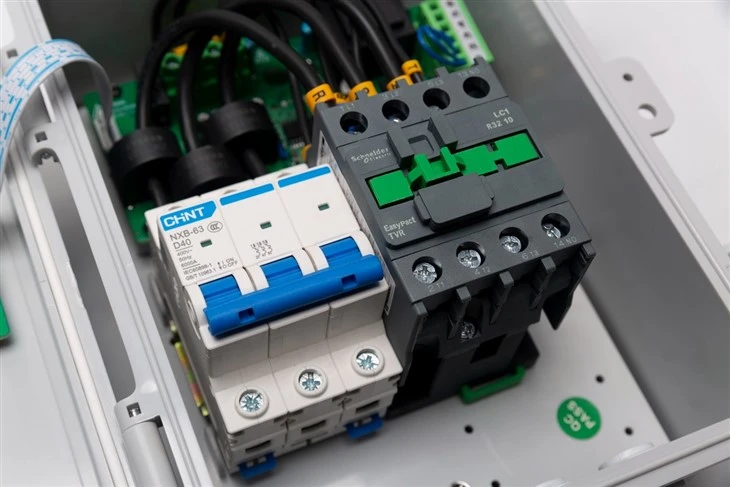

For small pumps with low starting torque requirements and where cost is a major concern, DOL starting may be the best option. Star - delta starting is suitable for medium - sized pumps and applications where the power supply capacity is limited. Auto - transformer starting is a good choice for large pumps that need to start under heavy load conditions. Soft - starter starting is ideal for applications where a smooth start and additional protection features are required. VFD starting is recommended for applications where precise speed control and energy savings are the main objectives.
As a supplier of 3 Phase Pump Controller, I can provide expert advice on choosing the right starting method for your specific application. We also offer a wide range of 3 Phase Pump Controllers, including 3 Phase Control Panel for Submersible Pump and 3 Phase Submersible Pump Control Panel, which are designed to meet the diverse needs of our customers.
If you are interested in purchasing a 3 Phase Pump Controller or need more information about starting methods, please feel free to contact us. Our team of experts will be happy to assist you in finding the best solution for your pumping system.
References
- Electric Machinery Fundamentals, Stephen J. Chapman
- Power System Analysis and Design, J. Duncan Glover, Mulukutla S. Sarma, Thomas J. Overbye
- Pump Handbook, Igor J. Karassik, Joseph P. Messina, Paul Cooper, Charles C. Heald