

What is the technical support for a single phase pump controller?
Dec 09, 2025
Hey there! As a supplier of single phase pump controllers, I often get asked about the technical support behind these nifty devices. So, I thought I'd take a few minutes to break it down for you.
First off, let's understand what a single phase pump controller does. In a nutshell, it's a device that manages the operation of a single - phase pump. Single - phase pumps are widely used in various applications, from small domestic water supply systems to some light - industrial processes. The controller ensures that the pump starts and stops at the right times, protects it from damage, and can sometimes even adjust the pump's performance based on different conditions.
1. Power Supply and Voltage Regulation
One of the key technical aspects of a single phase pump controller is dealing with the power supply. Single - phase power is commonly available in residential and many small - scale commercial settings. The controller needs to be compatible with the voltage levels of the local power grid. In most regions, it's either 110V or 230V.
Our controllers are designed to handle variations in voltage. They have built - in voltage regulation circuits that protect the pump from over - voltage or under - voltage situations. An over - voltage can cause the pump motor to overheat and potentially burn out, while under - voltage can lead to the motor not running at its optimal speed, reducing the pump's efficiency.
2. Starting and Stopping Mechanisms
Starting a single - phase pump is not as straightforward as you might think. Unlike three - phase pumps, single - phase motors don't have a natural rotating magnetic field. So, the controller plays a crucial role in providing the initial boost to get the motor spinning.
We use different starting methods in our controllers. One common method is the capacitor - start method. A start capacitor is connected to the motor circuit during the starting process. This capacitor creates a phase shift in the current, which helps to generate a rotating magnetic field and gets the motor going. Once the motor reaches a certain speed, the controller disconnects the start capacitor from the circuit.
As for stopping, the controller can be set to stop the pump based on different criteria. For example, in a water supply system, it can stop the pump when the water tank is full. This is usually achieved through pressure switches or level sensors. When the pressure in the tank reaches a pre - set maximum value or the water level reaches the top, the controller receives a signal and stops the pump.
3. Protection Features
Protecting the pump from damage is a top priority. Our single phase pump controllers come with several built - in protection features.
Over - current Protection
This feature monitors the current flowing through the pump motor. If the current exceeds a safe limit, which could happen due to a blocked outlet, a mechanical problem in the pump, or a short - circuit, the controller will immediately shut off the power to the pump. This helps to prevent the motor from overheating and getting damaged.
Thermal Protection
Pump motors generate heat during operation. If the temperature gets too high, it can degrade the motor's insulation and eventually lead to a failure. Our controllers have thermal sensors that continuously monitor the motor's temperature. When the temperature reaches a critical level, the controller will stop the pump and allow it to cool down.
Dry - run Protection
Running a pump without water, also known as dry - running, can cause serious damage to the pump. Our controllers are equipped with dry - run protection features. This can be done using level sensors or flow sensors. If the sensors detect that there is no water in the inlet or very low water flow, the controller will stop the pump to prevent damage.
4. Control and Monitoring
Modern single phase pump controllers offer advanced control and monitoring capabilities.
You can use our controllers to set up different operating modes. For example, you can set the pump to run continuously, or in an intermittent mode where it starts and stops at regular intervals. You can also connect the controller to a remote control system, which allows you to start and stop the pump from a distance.
Monitoring is also an important aspect. Our controllers can provide real - time information about the pump's operation, such as the current, voltage, temperature, and running time. This data can be very useful for maintenance and troubleshooting.
5. Compatibility and Integration
Our single phase pump controllers are designed to be compatible with a wide range of single - phase pumps. Whether it's a submersible pump, a surface pump, or a booster pump, our controllers can work with them.
We also offer options for integration with other systems. For example, you can integrate our Single Phase Submersible Panel with a building's automation system. This allows for centralized control and monitoring of the pump along with other building systems.
6. Technical Support from Our Side
As a supplier, we understand that technical issues can arise. That's why we offer comprehensive technical support to our customers.
Our team of experts is always ready to answer your questions. Whether you're having trouble installing the controller, need help with programming, or are facing a technical problem with the pump, we're just a call or an email away.
We also provide detailed user manuals and online resources. These resources can help you understand the features and functions of our controllers, and guide you through the installation and maintenance process.

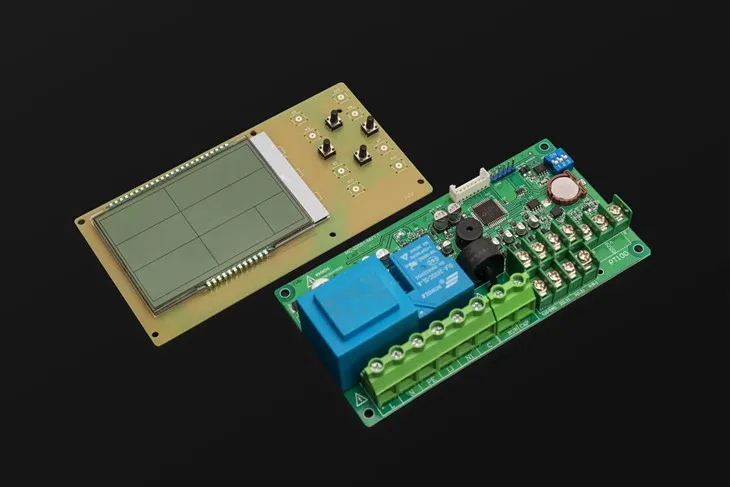
If you're in the market for a single - phase pump controller, we've got you covered. Our Single Phase Submersible Control Panel and Single Phase Submersible Pump Control Panel are top - notch products that offer reliable performance and excellent technical support.
If you're interested in learning more about our products or want to discuss your specific requirements, don't hesitate to reach out. We're eager to help you find the right single phase pump controller solution for your needs.
References
- "Pump Handbook" by Igor J. Karassik et al.
- "Electrical Engineering for Non - Electrical Engineers" by Stanley W. Harman
- Industry standards and guidelines related to single - phase pump controllers.