

Can a 3 Phase Pump Control Panel be integrated with a PLC?
Nov 28, 2025
Can a 3 Phase Pump Control Panel be integrated with a PLC?
As a supplier of 3 Phase Pump Control Panel, I often encounter questions from customers regarding the integration of a 3 phase pump control panel with a Programmable Logic Controller (PLC). This topic is of great interest, especially in industrial and commercial applications where automation and precise control are crucial. In this blog post, I will explore the feasibility, benefits, and challenges of integrating a 3 phase pump control panel with a PLC.
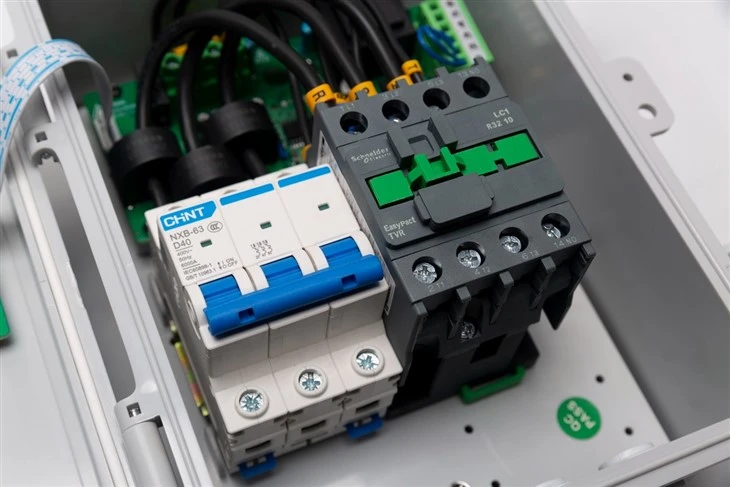

Feasibility of Integration
The short answer is yes, a 3 phase pump control panel can be integrated with a PLC. Both the 3 phase pump control panel and the PLC are designed to work within the electrical and control systems of industrial and commercial settings. The 3 phase pump control panel is responsible for controlling the operation of 3 phase pumps, which are commonly used in applications such as water supply, irrigation, and industrial processes. On the other hand, a PLC is a digital computer used for automation of industrial processes, such as controlling machinery on factory assembly lines, amusement rides, or light fixtures.
The integration process involves connecting the control signals from the PLC to the input terminals of the 3 phase pump control panel. These signals can be used to start, stop, or adjust the speed of the pump. The control panel, in turn, provides feedback signals to the PLC, indicating the status of the pump, such as whether it is running, stopped, or experiencing an error. This two - way communication allows for a high level of control and monitoring.
Benefits of Integration
- Automation and Efficiency
Integrating a 3 phase pump control panel with a PLC enables full automation of the pump operation. The PLC can be programmed to start and stop the pump based on various conditions, such as water level, pressure, or time. For example, in a water supply system, the PLC can start the pump when the water level in the tank drops below a certain level and stop it when the tank is full. This reduces the need for manual intervention, improves efficiency, and ensures a consistent supply of water. - Precise Control
A PLC offers precise control over the pump operation. It can adjust the pump speed to match the demand, which is particularly useful in applications where the flow rate needs to be regulated. For instance, in an industrial process where the amount of liquid being pumped needs to be precisely controlled, the PLC can adjust the pump speed to maintain the desired flow rate. This not only improves the quality of the process but also reduces energy consumption. - Monitoring and Diagnostic Capabilities
The integration allows for real - time monitoring of the pump status. The PLC can collect data from the control panel, such as pump current, voltage, and temperature. This data can be used to detect potential problems early, such as overheating or abnormal current draw. The PLC can also generate alarms and notifications when an error occurs, enabling quick response and minimizing downtime. - Flexibility and Scalability
PLCs are highly flexible and can be easily reprogrammed to adapt to changing requirements. If the pump system needs to be modified or expanded, the PLC can be reprogrammed without significant changes to the hardware. This makes it suitable for both small - scale and large - scale applications.
Challenges of Integration
- Technical Expertise
Integrating a 3 phase pump control panel with a PLC requires technical expertise. The installer needs to have a good understanding of both the control panel and the PLC programming. They need to be able to configure the control panel to receive and respond to the signals from the PLC correctly. Incorrect installation or programming can lead to system failures or safety hazards. - Compatibility Issues
There may be compatibility issues between the 3 phase pump control panel and the PLC. Different manufacturers may use different communication protocols and signal levels. It is essential to ensure that the control panel and the PLC are compatible before attempting the integration. This may involve checking the specifications of both devices and, in some cases, using additional interface modules. - Cost
The integration process can be costly. In addition to the cost of the PLC itself, there may be additional costs for wiring, programming, and testing. For small - scale applications, the cost of integration may not be justified. However, for large - scale and complex applications, the benefits of integration often outweigh the costs.
How Our 3 Phase Pump Control Panels Facilitate Integration
As a supplier of 3 Phase Pump Control Panel, we understand the importance of easy integration with PLCs. Our control panels are designed with standard input and output terminals that are compatible with most common PLCs. We also provide detailed documentation and technical support to assist our customers in the integration process.
Our 3 Phase Pump Controller is equipped with advanced features that make it suitable for integration. It has built - in sensors and communication interfaces that can provide accurate feedback to the PLC. For example, our 3 Phase Control Panel for Submersible Pump can measure the water level and pressure and send this information to the PLC, allowing for precise control of the submersible pump.
Conclusion
In conclusion, integrating a 3 phase pump control panel with a PLC is not only feasible but also offers numerous benefits in terms of automation, efficiency, precise control, and monitoring. However, it also presents some challenges, such as technical expertise requirements, compatibility issues, and cost. As a supplier, we are committed to providing high - quality 3 phase pump control panels that are easy to integrate with PLCs.
If you are interested in integrating a 3 phase pump control panel with a PLC for your application, we invite you to contact us for more information and to discuss your specific requirements. Our team of experts is ready to assist you in finding the best solution for your pump control needs.
References
- "Industrial Automation Handbook" by Peter Welborn
- "Programmable Logic Controllers: Principles and Applications" by David A. Stout
- Technical documentation from various PLC and pump control panel manufacturers