

What is the difference between a basic and an advanced three - phase pump controller?
Nov 24, 2025
Hey there! As a supplier of three - phase pump controllers, I've been in the thick of this industry for quite a while. And one question that comes up a lot is, "What's the difference between a basic and an advanced three - phase pump controller?" Well, let's dive right in and break it down.
Basic Three - Phase Pump Controllers
Let's start with the basics. A basic three - phase pump controller is like the workhorse of the pump control world. It's simple, reliable, and gets the job done. These controllers are designed to perform the fundamental functions required to operate a three - phase pump.
One of the primary functions of a basic controller is to start and stop the pump. It can detect when the pump needs to turn on, like when the water level in a tank drops below a certain point, and then start the pump to refill it. Once the tank is full, it stops the pump. It's a straightforward on - off operation.
Basic controllers also offer some level of protection for the pump. For example, they can prevent the pump from running dry. If the water supply to the pump is cut off, the controller will sense this and shut down the pump to avoid damage. They may also have overload protection. If the pump draws too much current, which could indicate a problem like a jammed impeller, the controller will trip and stop the pump.
In terms of cost, basic three - phase pump controllers are relatively inexpensive. They're a great option for small - scale applications where you don't need a lot of fancy features. For instance, a small farm with a single water well might use a basic controller to manage the water pump for irrigation.
However, basic controllers do have their limitations. They usually have a fixed set of parameters. You can't easily adjust things like the start and stop levels of the pump based on different conditions. And they often lack advanced monitoring and diagnostic capabilities. If something goes wrong with the pump, it can be challenging to figure out what the problem is just by looking at the basic controller.
Advanced Three - Phase Pump Controllers
Now, let's talk about advanced three - phase pump controllers. These are the high - tech cousins of the basic controllers. They offer a whole range of features that go beyond the simple on - off operation.
One of the key features of advanced controllers is their programmability. You can customize the settings to suit your specific needs. For example, you can set different start and stop levels for the pump depending on the time of day or the season. This is especially useful in applications where water demand varies. In a large commercial building, the water usage during peak hours is much higher than during off - peak hours. An advanced controller can be programmed to adjust the pump operation accordingly.
Advanced controllers also come with advanced monitoring and diagnostic capabilities. They can continuously monitor various parameters of the pump, such as current, voltage, temperature, and pressure. If any of these parameters go out of the normal range, the controller can send an alert. This allows for early detection of problems, which can save a lot of time and money in the long run. You can also access detailed diagnostic reports, which can help you quickly identify and fix issues with the pump.
Another advantage of advanced controllers is their communication capabilities. Many advanced controllers can be connected to a network, either wired or wireless. This means you can monitor and control the pump from a remote location. You can use a computer or a smartphone app to check the status of the pump, adjust the settings, and receive alerts. This is extremely convenient, especially for large - scale operations where the pump is located in a remote or hard - to - reach area.
However, all these advanced features come at a cost. Advanced three - phase pump controllers are more expensive than basic ones. They also require more technical knowledge to install and program. If you're not familiar with the technology, you may need to hire a professional to set it up for you.
Comparison in Different Applications
Let's take a look at how basic and advanced controllers perform in different applications.
Residential Applications
In a typical residential setting, a basic three - phase pump controller may be sufficient. For example, if you have a well - water system in your home, a basic controller can effectively manage the water pump. It can start the pump when the water pressure drops and stop it when the tank is full. You don't usually need the advanced features like remote monitoring or programmability in a home environment.

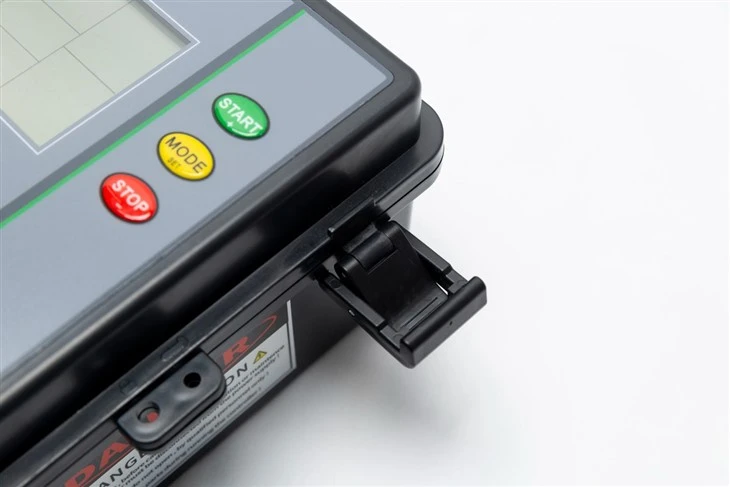
Commercial and Industrial Applications
On the other hand, commercial and industrial applications often require advanced controllers. In a factory, for instance, the water demand can vary greatly depending on the production process. An advanced controller can be programmed to adjust the pump operation based on the real - time demand. It can also provide detailed monitoring and diagnostic information, which is crucial for maintaining the efficiency and reliability of the pump system.
Agricultural Applications
In agriculture, both basic and advanced controllers have their place. Small farms with simple irrigation systems may opt for basic controllers to keep costs down. However, large - scale farms with complex irrigation networks may benefit from advanced controllers. These controllers can be programmed to water different fields at different times, based on the soil moisture levels and crop requirements.
Where to Find Three - Phase Pump Controllers
If you're interested in learning more about three - phase pump controllers, you can check out our 3 Phase Water Pump Controller, 3 Phase Control Panel for Submersible Pump, and 3 Phase Pump Control Panel pages on our website.
Conclusion
So, to sum it up, the main difference between a basic and an advanced three - phase pump controller lies in their features, functionality, and cost. Basic controllers are simple, inexpensive, and suitable for small - scale applications with straightforward requirements. Advanced controllers, on the other hand, offer programmability, advanced monitoring, and remote control capabilities, but they come at a higher price and require more technical expertise.
If you're still not sure which type of controller is right for your application, don't hesitate to get in touch with us. We have a team of experts who can help you make the right choice. Whether you need a basic controller for a small project or an advanced one for a large - scale operation, we've got you covered. Let's have a chat and find the perfect three - phase pump controller for your needs.
References
- Industry knowledge and experience in three - phase pump controller supply.
- Technical specifications of various three - phase pump controllers.